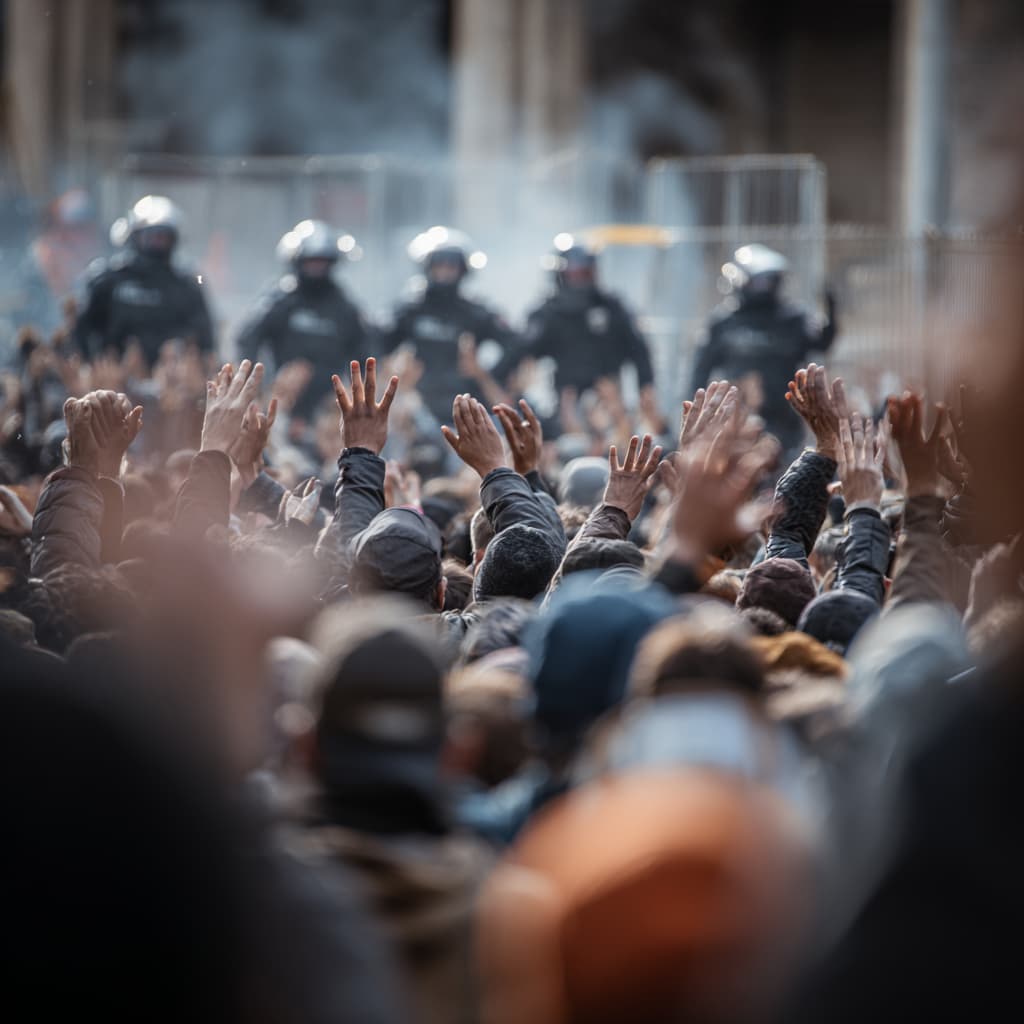
In contemporary political life, crisis is no longer an interruption of normal governance. It has become its defining feature. Economic instability, security threats, public health risks, and social unrest are increasingly framed as ongoing emergencies. What was once presented as temporary now appears permanent. Emergency politics no longer signal a short-term response to danger, but a governing strategy that reshapes how power is exercised and justified.
The Original Meaning of Emergency Politics
Historically, emergency powers were meant to be limited in scope and duration. Democratic systems distinguished between ordinary governance and exceptional moments when normal procedures could not function. Crises were understood as short-lived disruptions requiring temporary authority. Once the danger passed, legal norms and political debate were expected to return.
Over time, this distinction weakened. Instead of clear beginnings and endings, crises began to overlap. One emergency replaced another, creating a continuous state of urgency. The exception stopped being exceptional and slowly became routine.
Why Crisis Is Politically Effective
Crisis simplifies politics. Complex social and economic problems can be reframed as urgent threats requiring immediate action. This framing reduces space for debate and discourages disagreement. Policies presented as necessary for survival are harder to question without appearing irresponsible.
Emergency politics favors speed over deliberation. Decisions are justified by urgency rather than consensus. Authority becomes more centralized, and accountability is postponed. In this environment, democratic procedures are not abolished, but they are sidelined.
Fear and the Normalization of Control
Fear is a central tool of crisis governance. When danger is presented as constant, populations become more willing to accept restrictions. Surveillance, expanded policing, and limitations on civil liberties are justified as protective measures. Over time, these measures blend into everyday life.
What begins as temporary protection becomes permanent infrastructure. People adapt to constant alertness, not because threats disappear, but because control mechanisms become familiar. Normalization replaces consent.
Crisis as a Way to Avoid Structural Questions
Emergency politics also shifts responsibility. Governments often describe crises as external forces beyond political control. Economic instability is blamed on global markets, insecurity on foreign actors, social problems on abstract risks.
This framing discourages structural analysis. Instead of addressing underlying causes, crisis management focuses on containment. Governance becomes reactive. Long-term reform is postponed in favor of short-term stabilization, even when the same problems repeatedly return.
Legal Frameworks and Expanding Executive Power
Many democratic systems include legal tools that allow executives to bypass standard procedures during emergencies. These mechanisms were designed for rare situations, but are now used more frequently and for longer periods.
Temporary laws are extended. Special powers are renewed. Exceptional measures are incorporated into permanent legislation. The language of emergency provides legal justification for expanding authority without openly rewriting constitutional norms. Power grows incrementally, often without public debate.
Media, Urgency, and Political Time
Modern media ecosystems reinforce emergency politics. Continuous news cycles depend on urgency and crisis narratives. Political actors adapt by presenting policies as immediate responses to looming threats.
This constant urgency compresses political time. Long-term planning appears irrelevant when attention is fixed on immediate danger. Politics becomes a sequence of managed emergencies rather than a space for collective vision and democratic imagination.
Unequal Consequences of Emergency Governance
Although crises are framed as shared threats, their consequences are uneven. Emergency measures tend to affect vulnerable groups more severely. Increased policing often targets marginalized communities. Surveillance technologies are tested on those with limited political influence.
Crisis rhetoric masks these inequalities by presenting policies as neutral and universal. The language of necessity hides the fact that some groups bear the costs of emergency governance more than others.
Changing the Role of the Citizen
Permanent crisis reshapes public expectations. Citizens become accustomed to being governed through exceptional measures. Participation shifts from active engagement to passive compliance. People are asked to trust authorities, endure restrictions, and wait for stability that never fully arrives.
Democratic agency weakens not through open repression, but through exhaustion. When politics is defined by constant emergency, questioning authority feels dangerous or pointless.
Why Emergency Powers Rarely Disappear
History shows that emergency powers tend to persist. Tools introduced for one crisis are reused for another. Surveillance justified by security concerns becomes useful for public order. Health-related restrictions inform future crowd-control strategies.
Ending an emergency is politically risky. Declaring normality means admitting that extraordinary control is no longer necessary. Leaders often prefer to maintain a sense of threat rather than relinquish expanded authority.
Conclusion
Crises are real. Economic collapse, pandemics, and security threats cannot be ignored. The problem lies in how crises are used politically. Emergency politics transforms genuine danger into a permanent justification for exceptional power.
When crisis becomes the norm, democracy risks becoming procedural rather than participatory. Laws remain, elections continue, but meaningful debate shrinks. Governance shifts from collective problem-solving to administrative control.
Understanding crisis as a governing strategy allows us to question not only specific policies, but the framework that sustains them. If emergency politics never end, the challenge is not to deny crises, but to resist their transformation into permanent rule.